O-rings may look simple, but small dimensional deviations can affect sealing performance, assembly fit, and service consistency. As industrial systems become more compact and tolerance requirements become tighter, dimensional control has become a practical production concern. For manufacturers of injection molded rubber parts, stable cavity filling, material behavior, mold temperature, and injection pressure all influence final geometry.
The challenge is not only producing an O-ring that matches a nominal size. Producers also need repeatable dimensions across cavities, batches, and long production runs. This is why equipment selection, process control, and rubber flow management are closely connected with precision sealing requirements.
Why O-Ring Dimensions Are Difficult to Control
Rubber behaves differently from rigid thermoplastics during molding. Rubber dimensions can change during vulcanization and after demolding because of thermal contraction, elastic recovery, and post molding dimensional changes. Natural rubber, nitrile rubber, and fluoro rubber also respond differently to temperature and curing conditions. Dimensional control therefore depends on the complete molding process, not mold design alone.
O-ring production involves several dimensions at the same time. Inner diameter, outer diameter, and cross-section must remain within the required tolerance range. When one parameter shifts, sealing contact or installation fit can change. Process repeatability is therefore important in automotive, electrical, hydraulic, and industrial sealing applications.
Cavity balance also matters. Differences in filling pressure, temperature, or curing conditions between cavities can contribute to dimensional variation within the same molding cycle. Changes in venting, feed path length, or compound viscosity can further affect how evenly each cavity fills. Stable injection behavior can reduce this variation and give technicians clearer control over filling and curing.
How Injection Control Affects Precision
A rubber injection molding machine for sealing rings needs to deliver rubber into the mold in a controlled and repeatable way. Injection pressure, speed, material temperature, and shot consistency all affect cavity filling. Variation in these conditions can contribute to flash, incomplete filling, density differences, or dimensional changes.
FIFO injection can support more consistent material flow because the rubber entering the injection unit first is also injected first. This helps reduce differences in residence time. For compounds sensitive to heat history, more consistent residence conditions can simplify process adjustment during repeated cycles.
Ultra-high pressure injection can be useful when molds contain small or complex flow paths. Higher available pressure gives manufacturers more processing flexibility, but the setting still needs to match the compound, mold, and part geometry. The objective is controlled filling rather than simply using higher pressure.
Cold Runner Technology and Material Stability
Cold-runner systems keep rubber at a controlled temperature before it enters the mold cavities. This can reduce unwanted curing in the runner area and support more stable material delivery during repeated production.
For a rubber injection molding machine for sealing rings, cold-runner technology is relevant when manufacturers process costly compounds or parts that require consistent cavity filling. A controlled runner environment can help maintain a more predictable material state before injection.
This is useful for NBR and fluoro rubber because processing conditions influence molding behavior and finished-part consistency. A stable feed path also gives technicians a clearer basis for adjusting injection and curing parameters during trials.
Equipment Features for Repeatable Production
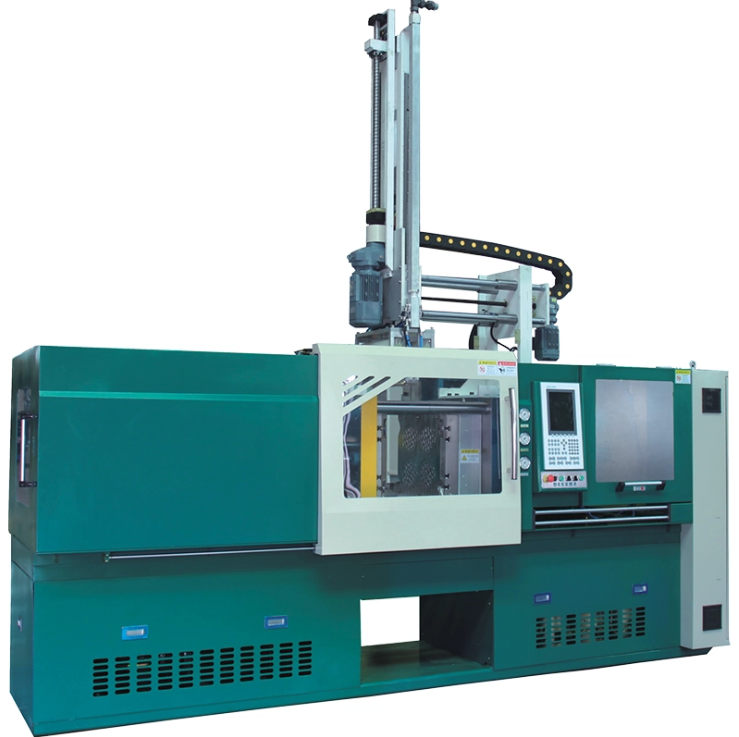
The RH Series is designed for sealing rings and other precision rubber components. It supports natural rubber, NBR, and fluoro rubber processing and combines FIFO injection with cold-runner technology. An integrated injection unit is also part of the machine configuration.
The machine includes automatic brushes, a servo-driven hydraulic pump system, and an ultra-high pressure injection system. These features address different stages of production. Automatic brushes can reduce manual brushing where the machine’s brush system is designed for the relevant cleaning task, while a servo driven hydraulic system can regulate machine movement.
When producing injection molded rubber parts, manufacturers should assess equipment together with mold design, compound properties, curing conditions, and production volume. Machine functions are useful when they correspond to the actual process requirements of the sealing component.
What Buyers Should Check Before Production
Manufacturers should first define the required tolerance, rubber compound, cavity layout, cycle conditions, and inspection method. Measurement timing also matters because rubber dimensions can change as parts cool and relax after demolding. Dimensional targets should be connected with the sealing function rather than treated as isolated numbers on a drawing.
The next step is reviewing process stability. Injection repeatability, pressure control, material residence behavior, mold temperature management, and automation needs all deserve attention. This helps determine whether the selected rubber injection molding machine for sealing rings fits the planned production conditions.
Dekuma develops rubber injection molding equipment for industrial applications, including sealing-ring production. Its RH Series supports natural rubber, nitrile rubber, and fluoro rubber. Buyers can compare these machine functions with their product tolerances, compound behavior, mold structure, and expected production rhythm.
Dimensional Accuracy Depends on Process Matching
O-ring accuracy comes from the interaction between material, mold, injection behavior, temperature, pressure, and curing. Reviewing these factors together helps manufacturers locate possible sources of dimensional variation and make adjustments based on process conditions.
For companies comparing injection molded rubber parts production methods, equipment should be viewed as one part of the complete molding system. Dekuma also provides turnkey rubber injection molding support, while the final setup still needs to reflect the material, tolerance, mold, and application requirements of each sealing component.